
You pick at your skin, and you simply cannot stop. Many people do this without even realizing it. It feels automatic, almost like a reflex. However, sometimes this habit goes far beyond normal. It becomes a serious skin-picking disorder that disrupts your everyday life.
Wounds appear. Scars form. Shame quietly follows. The urge never truly fades away. This condition is real, recognized, and fully treatable. You are not alone in this struggle. Therefore, understanding it is your very first step towards recovery. Capital Health and Wellness is here to guide you forward every step of the way.
What Is Skin Picking Disorder?
Skin picking disorder is a mental health condition where a person repeatedly picks at their skin. It sits within the obsessive-compulsive spectrum of disorders. People feel a strong, uncontrollable urge to pick. They target scabs, spots, or even healthy skin. This condition causes real harm, emotionally and physically.
Is Skin Picking Disorder a Mental Illness?
Yes, absolutely. Officially recognized under the DSM-5 classification, this is a diagnosable mental illness. Never mistake it for a bad habit. Rather, it is a genuine disorder that requires proper care and treatment.
What Causes Skin Picking Disorder?
Understanding the cause helps you find the right solution. This condition runs deeper than just a bad habit. In fact, neurobiological underpinnings strongly influence this repetitive behavior. Here are the most common causes:
- Serotonin imbalance affects mood control and increases compulsive urges.
- The dopamine reward mechanism makes picking feel instantly relieving and satisfying.
- High stress and anxiety fuel the need for repetitive skin-focused actions.
- Family history and genetics raise the risk significantly.
- Past trauma or emotional distress often triggers this condition silently.
How to Recognize the Signs of Dermatillomania Skin Picking Disorder
Recognizing this condition early makes a real difference. Many people experience a strong compulsive urge to pick repeatedly.
This recurrent picking behavior often leads to serious tissue damage over time. Both automatic and focused picking patterns exist, each showing different warning signs.
Common Triggers Behind Compulsive Skin Picking
Triggers vary from person to person. However, certain patterns appear consistently across cases. Understanding your triggers is the first step towards healing. Here are the most common ones:
- Behavioral inhibition and emotional stress push people towards picking unconsciously.
- Poor impulse control makes stopping feel almost impossible at the moment.
- Maladaptive behavior patterns develop slowly, often linked to generalized anxiety disorder.
- Body dysmorphic disorder and trichotillomania frequently appear alongside this condition.
Anxiety Disorder and Skin Picking: What’s the Connection?
Anxiety and picking are deeply connected. People dealing with anxiety disorder and skin picking often feel overwhelmed by emotional distress. Furthermore, psychiatric comorbidity is very common in these cases.
Many individuals also struggle with obsessive-compulsive disorder (OCD) alongside this condition. One fuels the other, creating a difficult cycle to break alone.
How Skin Picking Disorder Affects Daily Life
Living with chronic skin-picking affects everything around you. This body-focused repetitive disorder slowly damages your confidence and relationships. Social situations become frightening.
Therefore, social avoidance and isolation become a daily reality for many sufferers. Consequently, quality of life impairment grows deeper over time, making professional support essential.
Skin Picking Disorder Treatment Options That Work
Effective skin picking disorder treatment is available, and it truly works. You do not have to suffer in silence any longer. Cognitive behavioral therapy (CBT) helps change harmful thought patterns gradually.
Additionally, habit reversal training (HRT) and acceptance and commitment therapy (ACT) build healthier responses. N-acetylcysteine (NAC) also shows promising results in clinical studies.
How to Stop a Skin Picking Disorder at Home
Starting recovery at home is absolutely possible. Small daily steps build stronger impulse control over time. Moreover, consistency matters more than perfection here. Try these practical steps today:
- Keep your hands busy with a stress ball or fidget tool.
- Cover problem areas with bandages to reduce easy skin access.
- Identify your triggers and write them down daily.
- Replace picking with a healthier habit like deep breathing exercises.
How to Help Someone With Skin Picking Disorder
Helping a loved one starts with patience and understanding. Never shame or criticize their behavior, as it makes things worse. Instead, listen without judgment and offer gentle support daily.
Educate yourself about this condition first. Furthermore, encourage them to seek professional help early. Small acts of kindness create big changes over time. Your support genuinely matters more than you realize.
How to Overcome Skin Picking Disorder With Professional Support
Overcoming this condition alone is incredibly difficult. Professional guidance makes the recovery journey far more manageable and effective. Specialists understand exactly what you are going through.
Therefore, reaching out is always the bravest and smartest decision. A qualified therapist creates a personalized plan just for you. Progress becomes visible, measurable, and truly life-changing with the right support beside you.
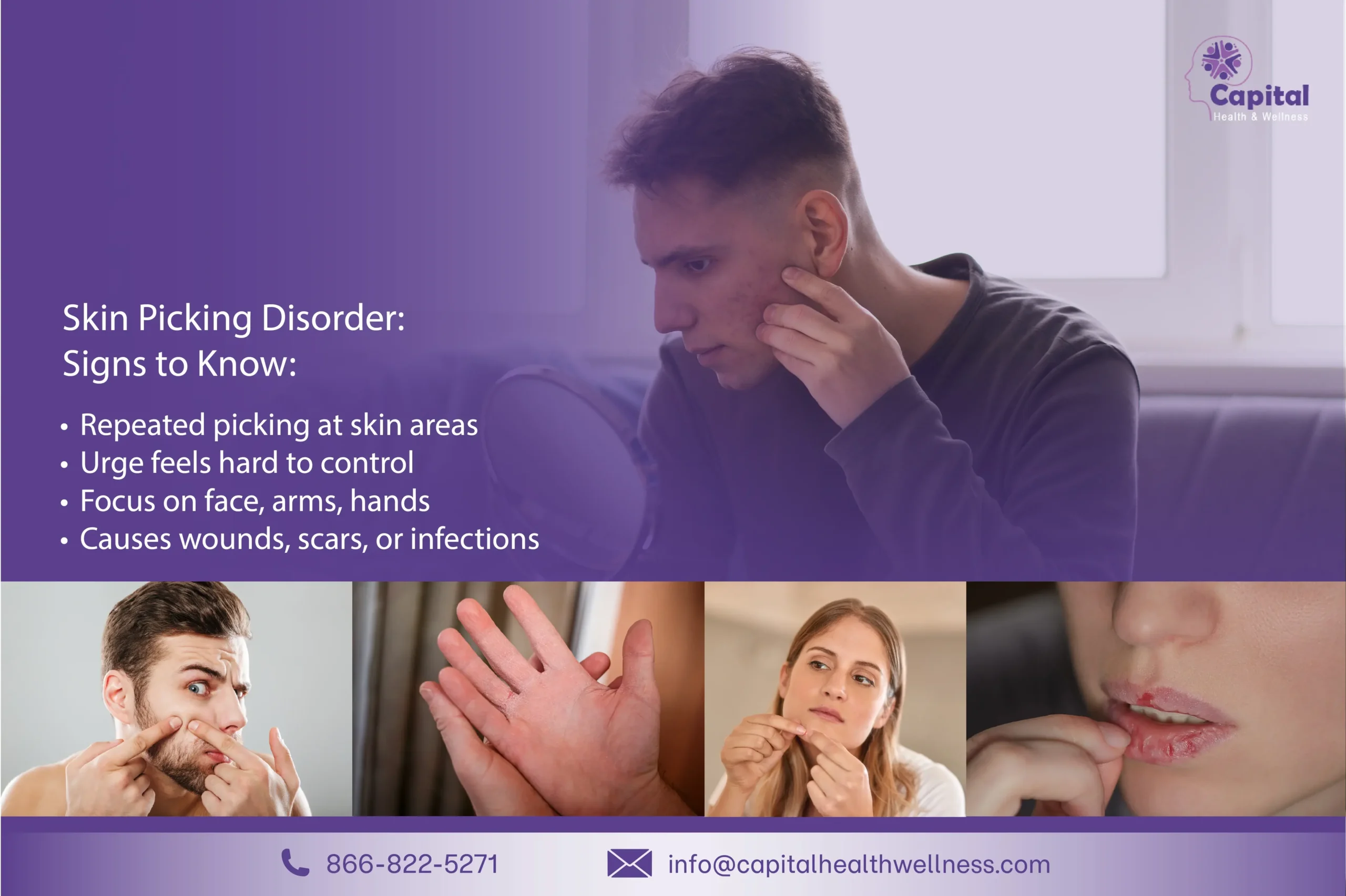
Why Choose Capital Health And Wellness for Skin Picking Disorder Care
Recovery is possible, and you deserve the very best support. Capital Health and Wellness specializes in compassionate, evidence-based care for every patient. Our experienced team understands how deeply this condition affects your life.
Moreover, we create personalized treatment plans tailored specifically to your needs. Therefore, choosing us means choosing real, lasting results.
- Qualified specialists with proven experience in skin picking disorder care.
- Personalized treatment plans designed around your unique recovery journey.
- Compassionate support is available every step of the way.
- Evidence-based therapies that deliver real, measurable results.
- A safe, judgment-free environment where healing truly begins.
Ready to take the first step? Contact Capital Health and Wellness today, because you deserve to heal.
Conclusion
Understanding skin-picking disorder is the first step towards real recovery. This condition affects thousands of people, yet many suffer in silence. However, help is always available, and healing is absolutely possible. Therefore, never wait too long to seek proper support.
Surround yourself with people who genuinely care about your well-being. Furthermore, professional guidance makes every step easier and clearer. You are stronger than this condition, and recovery truly begins today.
FAQs
Can skin picking disorder cause infection?
Yes. Repeated picking breaks the skin and opens wounds. Bacteria enter easily. This leads to painful infections and sometimes requires medical treatment.
Does skin picking disorder run in families?
Yes, genetics plays a role. People with a parent or sibling with this condition face a higher risk of developing it themselves.
Can children develop a skin-picking disorder?
Absolutely. It often begins during adolescence, around ages 13 to 15. However, younger children and adults can also develop this condition.
Can skin picking disorder cause permanent scarring?
Yes. Without treatment, repeated picking causes lasting scars and skin discoloration. Early professional support helps prevent serious long-term skin damage.
Is medication available for skin-picking disorder?
Yes. Doctors sometimes prescribe SSRIs or anticonvulsants alongside therapy. Medication works best when combined with professional behavioral treatment and consistent support.
References