Is your teenager struggling with emotional challenges, anxiety, or behavioral issues, but doesn’t require hospital admission? Outpatient Treatment for Teens offers the perfect balance of structured support and everyday flexibility. Instead of staying overnight in a facility, teens attend scheduled therapy while continuing school, hobbies, and family life. This approach helps young people access professional guidance without disrupting their daily routines.
Outpatient treatment allows teens to learn emotional regulation, develop coping strategies, and build healthier habits, all while living at home. Compared to more intensive programs like IOP (Intensive Outpatient Program) or PHP (Partial Hospitalization Program), standard outpatient care is flexible, affordable, and ideal for teens who need support but do not require round-the-clock supervision.
As teens receive consistent therapeutic guidance, they begin navigating real-life challenges with confidence, stability, and emotional awareness.
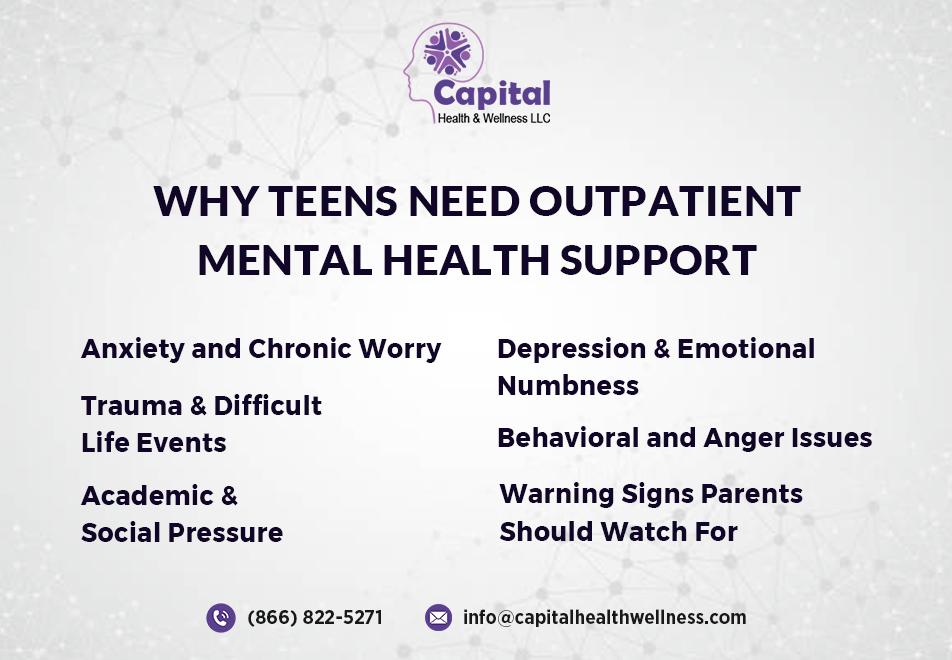
Why Teens Need Outpatient Mental Health Support
Today’s youth face overwhelming emotional pressures—often far more intense than previous generations. The rise of social media, academic expectations, bullying, and family stressors has contributed to a noticeable increase in teenage mental health disorders.
Common reasons teens need outpatient support include:
1. Anxiety and Chronic Worry
Teens may experience:
- Constant overthinking
- Panic attacks
- Fear of failure
- Social anxiety
Without help, these symptoms can worsen over time.
2. Depression and Emotional Numbness
Many teens struggle with:
- Persistent sadness
- Loss of interest in friends or hobbies
- Sleep problems
- Feelings of hopelessness
Depression requires prompt intervention to prevent further emotional decline.
3. Trauma and Difficult Life Events
Bullying, losses, family conflict, or traumatic experiences can deeply impact emotional well-being.
4. Behavioral and Anger Issues
Irritability, aggression, and oppositional behavior often signal underlying emotional distress.
5. Academic and Social Pressure
Many teens feel overwhelmed trying to balance:
- Grades
- Extracurricular activities
- Peer relationships
6. Warning Signs Parents Should Watch For
- Sudden mood changes
- Withdrawal from family or friends
- Drop in school performance
- Sleep issues
- Increased irritability
- Avoiding responsibilities
Early intervention prevents long-term consequences and promotes healthier development.
How Outpatient Therapy Supports Teens in Daily Life
Unlike inpatient or residential care, outpatient mental health for teens is designed to blend seamlessly into everyday life. Teens continue their routines while receiving professional support that helps them respond better to stress and emotional triggers.
Here’s how outpatient therapy supports real-world progress:
1. Maintains Academic Stability
Your teen can attend school regularly and keep up academically.
2. Strengthens Family Relationships
Therapists integrate family support so parents stay involved in healing.
3. Allows Real-Life Practice
Teens immediately apply coping skills to:
- Homework stress
- Social interactions
- Friend conflicts
- Peer pressure
- Emotional triggers
4. Promotes Healthy Independence
Teens learn responsibility, emotional regulation, and decision-making in real situations.
5. Encourages Social Continuity
Young people remain connected to their friends and community while receiving care.
Types of Outpatient Programs for Teens
Outpatient therapy for teens is not one-size-fits-all. Capital Health and Wellness offers adaptable treatment models to meet every teen’s unique needs.
1. Standard Outpatient Care
- 45–60 minute sessions once or twice a week
- Focus on teenage mental health disorders, including anxiety, depression, and behavioral challenges.
- Easily fits around school and extracurricular activities.
2. Intensive Outpatient Program (IOP)
- Multiple therapy sessions per week
- Structured support without removing teens from home life
- Perfect for adolescents who need more frequent guidance
- Helps prevent hospitalization
3. Virtual/Online Outpatient Care
- Secure video-based therapy sessions
- Ideal for teens with transportation or scheduling difficulties
- Offers privacy and convenience without losing effectiveness
4. Evening and Weekend Sessions
- Designed for teens with busy daytime schedules
- Allows uninterrupted school attendance
- Provides flexibility for families
Each program offers personalized care created to match your teen’s emotional, academic, and developmental needs.
Conditions Outpatient Treatment Helps With
Outpatient supports teens facing a wide range of emotional and behavioral challenges.
1. Anxiety Disorders & Depression
Treatment helps with:
- Panic attacks
- Chronic worry
- Sadness
- Social anxiety
- Low motivation
Therapy teaches teens how to regulate emotions, manage triggers, and rebuild confidence.
2. Trauma and PTSD
Therapists help teens process painful events gradually and safely.
3. Substance Use and Co-Occurring Disorders
Dual-diagnosis care treats both mental health concerns and substance use simultaneously.
4. Mood Disorders & Emotional Dysregulation
Teens struggling with:
- Mood swings
- Irritability
- Bipolar symptoms
- Impulse control issues
- receive specialized support.
- Self-Harm and Unsafe Behaviors
Therapists teach healthy coping strategies that reduce emotional distress and unsafe decisions.
Evidence-Based Therapies Used in Outpatient Treatment for Teens
Capital Health and Wellness uses proven, research-backed therapeutic approaches that work exceptionally well for adolescents.
1. Cognitive Behavioral Therapy (CBT)
- Reduces negative thoughts
- Improves problem-solving
- Helps teens replace fear-driven thinking with healthier patterns
2. Dialectical Behavior Therapy (DBT)
- Emotional regulation
- Distress tolerance
- Mindfulness techniques
- Reduces impulsive and self-harming behaviors
3. Eye Movement Desensitization and Reprocessing (EMDR)
- Highly effective for trauma and PTSD
- Helps teens process stressful events without emotional overwhelm
4. Group Therapy
- Builds peer support
- Reduces isolation
- Encourages healthy communication
5. Family Therapy
- Improves connection and trust
- Reduces conflict
- Enhances parental support
6. Experiential Therapies
- Art therapy
- Music therapy
- Journaling
- Skill-based activities that help teens express emotions safely
Major Benefits of Outpatient Therapy for Teens
Outpatient supports teens in meaningful ways that promote emotional healing and long-term growth.
Top Benefits Include:
- Maintains school attendance and daily routines
- Encourages real-life application of coping strategies
- Creates peer support and reduces isolation
- Builds healthy habits and emotional resilience
- Helps prevent future hospitalization
- Strengthens family involvement and communication
- More affordable than inpatient programs
- Less disruptive to teens’ lives and independence
Simply put, outpatient therapy can support teens in ways that fit naturally into their world.
Costs, Insurance, and Accessibility of Outpatient Care
Most families are relieved to learn that outpatient treatment is highly accessible.
Financial Support Options
- Most private insurance plans cover outpatient mental health services
- Medicaid coverage is available
- Flexible payment plans for families
Accessibility Support Includes:
- Evening and weekend appointments
- Telehealth services to reduce travel
- Transportation support for families who need it
Capital Health and Wellness works with families to ensure every teen can access the care they deserve.
Success Rates: Is Outpatient Treatment Actually Effective?
Yes, research consistently shows that outpatient treatment for teens is highly effective, especially when started early.
What Studies Show
- Nearly 70% of teens experience improvement within months
- Continued therapy increases long-term stability
- Teens build lifelong emotional skills and coping strategies
- Early intervention prevents future crises
Outpatient supports teens in building emotional strength, resilience, and independence.
Why Choose Capital Health and Wellness for Teen Outpatient Care?
Capital Health and Wellness provides specialized, compassionate, and personalized mental health care for teens. Our team understands the emotional, social, and developmental challenges teenagers face.
What Makes Us Different
- Experienced clinicians specializing in adolescent mental health
- Customized treatment plans for each teen
- Evidence-based therapies proven to work
- Family-centered approach
- Safe, supportive, judgment-free environment
- Flexible scheduling to support busy families
Your teen deserves a brighter, emotionally balanced future. Book a consultation with Capital Health and Wellness today and start a personalized treatment plan designed to support long-term mental well-being.
Conclusion
Outpatient Treatment for Teens offers life-changing support that empowers young people to heal emotionally, stay connected to daily routines, and thrive in school, home, and social settings. Teens develop long-lasting coping skills, emotional resilience, and confidence with consistent, supportive care.
Your teenager deserves compassionate, proven help.
Take the first step today. Capital Health and Wellness is here to guide your family toward healing, stability, and brighter futures.
FAQs
Is outpatient treatment effective for teens?
Yes. Outpatient treatment helps teens stabilize emotions, develop coping skills, and stay connected to school and family support.
How often do teens attend outpatient therapy?
Two to four times weekly, depending on their needs and the treatment plan.
Can outpatient programs support school performance?
Absolutely. Therapists help teens manage academic stress, improve focus, and build better study routines.
How is outpatient care different from inpatient treatment?
Outpatient allows teens to live at home while receiving structured therapy. It is more flexible and less intensive.
Are parents involved in the treatment process?
Yes. Parent involvement increases treatment success, communication, and long-term emotional stability.