Recovery begins with a single brave decision. For many individuals struggling with addiction, the search for drug and alcohol outpatient treatment near me becomes the first crucial step toward healing. Addiction often feels isolating, but support is much closer than most people realize. Local, high-quality outpatient programs offer hope, professional guidance, and proven tools for long-term recovery, while allowing individuals to maintain their daily routines.
Outpatient care is an excellent option for people who want flexibility without compromising the quality of treatment. Whether you are balancing work, family responsibilities, or personal commitments, outpatient programs offer structured therapy while you continue living at home. Countless individuals have rebuilt their lives through community-based treatment, and you can take that same empowered step today.
Why Many People Choose Outpatient Care Instead of Inpatient Rehab
Outpatient drug and alcohol treatment has become increasingly popular because it meets people where they are. It provides evidence-based care while supporting everyday life.
Key benefits include:
- Flexible scheduling: Ideal for individuals who must continue working, studying, or caring for family.
- Lower cost compared to inpatient rehab: Making treatment more accessible for many families.
- Real-world coping skill development: Patients practice sobriety while still living in their daily environment.
- Consistent support while living at home: Encourages accountability and builds strong recovery habits.
Outpatient therapy blends freedom with structure, offering a practical, supportive, and effective path toward sobriety.
Levels of Outpatient Care: Standard, IOP, and PHP
Different outpatient programs offer different levels of support. Understanding these helps you choose the right fit for your recovery needs.
1. Standard Outpatient Care
- 1–2 weekly therapy sessions
- Ideal for individuals with mild addiction concerns
- Focuses on education, early recovery tools, and supportive counseling
2. Intensive Outpatient Program (IOP)
- More intensive support with 3–5 sessions per week
- A strong option for people searching for intensive outpatient treatment for alcohol or drugs
- Sessions typically include group therapy, individual counseling, relapse-prevention education, and progress monitoring
3. Partial Hospitalization Program (PHP)
- Several hours of therapy per day
- Provides the highest level of structure outside inpatient rehab
- Ideal for individuals transitioning from residential programs or those needing daily support without overnight stays
Each level is designed to meet different clinical needs and lifestyles, ensuring that individuals receive treatment at the right intensity.
Who Benefits Most from Outpatient Treatment?
Outpatient recovery programs are highly effective for a wide range of individuals.
Outpatient care is best for:
- Individuals with mild to moderate addiction symptoms
- People with a stable home environment
- Patients who have strong family or social support
- Working professionals needing discreet, flexible care
- Former inpatient clients continuing their recovery journey
- Students balancing academic responsibilities
- Parents who need to remain at home with their children
Motivated individuals committed to sobriety often achieve excellent outcomes within outpatient settings, especially when paired with strong support systems.
Common Therapies Used in Outpatient Drug and Alcohol Treatment
Effective outpatient programs rely on evidence-based, scientifically proven treatment methods. Leading outpatient drug and alcohol treatment centers integrate a combination of therapeutic approaches customized to each patient’s needs.
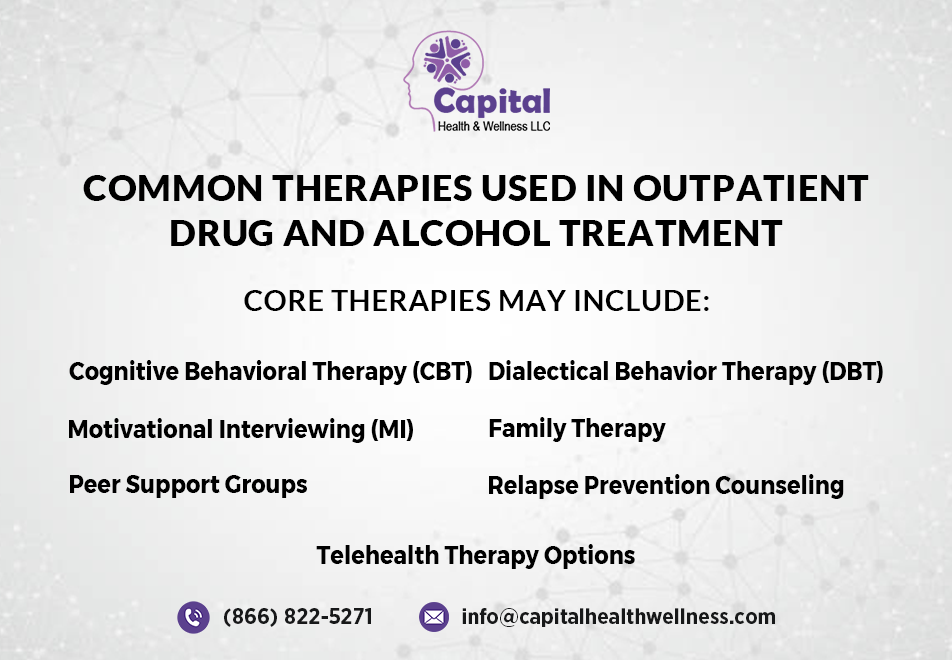
Core Therapies May Include:
- Cognitive Behavioral Therapy (CBT): Helps identify and change harmful thoughts and behaviors.
- Dialectical Behavior Therapy (DBT): Supports emotional regulation and stress management.
- Motivational Interviewing (MI): Encourages personal motivation and accountability in recovery.
- Family Therapy: Heals relationships and strengthens home support systems.
- Peer Support Groups: Provides community, accountability, and shared understanding.
- Relapse Prevention Counseling: Teaches strategies to avoid triggers and build long-term resilience.
- Telehealth Therapy Options: Offers convenient access for individuals with transportation or scheduling challenges.
These therapies address the emotional, behavioral, and mental-health needs that often accompany addiction.
How to Find the Best Drug and Alcohol Outpatient Treatment Near Me
Choosing the right treatment center is essential for long-term recovery. Start by researching facilities in your area and evaluating their qualifications.
Here’s how to identify a trustworthy program:
1. Use Google Maps and Local Searches
Search for drug and alcohol outpatient treatment near me to locate nearby centers, view photos, and check accessibility.
2. Read Patient Reviews
Look for detailed testimonials about staff professionalism, program quality, and recovery outcomes.
3. Verify Licensing and Accreditation
Reputable centers will have:
- State licensing
- Accreditation from trusted health organizations
- Credentialed addiction specialists and clinicians
4. Compare Treatment Options
Ensure the center offers:
- Intensive outpatient alcohol treatment
- Programs for co-occurring mental health conditions
- Relapse-prevention support
- Aftercare planning
5. Ask About Insurance Coverage
Most facilities accept insurance for drug and alcohol rehab outpatient treatment, but it’s important to verify coverage and out-of-pocket costs.
Thorough research ensures you choose a program that aligns with your clinical needs and personal goals.
How Outpatient Treatment Supports Long-Term Recovery
Successful recovery extends beyond the initial treatment phase. Outpatient programs build long-lasting habits and provide the support individuals need to maintain sobriety.
Long-term benefits include:
- Consistent accountability: Regular sessions reinforce progress and responsibility.
- Structured goal setting: Helps track improvements over time.
- Digital recovery tools: Apps and online check-ins keep individuals on track between sessions.
- Continued aftercare: Provides relapse-prevention strategies and ongoing emotional support.
Outpatient treatment is designed to guide individuals through every stage of recovery, from early stabilization to long-term wellness.
Specialized Outpatient Programs (Professionals, Parents, Teens, Veterans)
Not everyone faces the same challenges in recovery. Many centers offer customized programs for specific populations.
Examples include:
- Outpatient drug and alcohol treatment for professionals: Confidential, discreet, and schedule-friendly care for working adults.
- Parent-focused programs: Support for individuals balancing childcare and recovery.
- Teen and young adult programs: Age-specific counseling, academic support, and family involvement.
- Veteran-focused outpatient care: Addresses PTSD, trauma, and service-related challenges.
Personalized treatment improves engagement, comfort, and long-term success.
Why Choose Capital Health and Wellness
Capital Health and Wellness provides compassionate, evidence-based outpatient addiction treatment customized to your lifestyle and recovery goals.
What Sets Us Apart
- Experienced clinicians using proven therapies
- Flexible scheduling that fits work, school, and family life
- A safe, judgment-free environment
- Personalized treatment plans designed around your needs
- Insurance assistance and affordable care options
- Holistic support with therapy, education, and aftercare planning
Conclusion
Searching for drug and alcohol outpatient treatment near me can be the beginning of a life-changing transformation. Outpatient programs offer structure, flexibility, and expert support, empowering individuals to heal while staying connected to their daily lives. With the right guidance, recovery becomes not only possible but sustainable.
Your new beginning starts today. Reaching out for help is the strongest step you can take toward a healthier, more fulfilling future. Capital Health and Wellness is here to support your journey with compassionate, professional care every step of the way.
FAQs
What happens during drug and alcohol outpatient treatment?
You attend scheduled therapy sessions while living at home. Treatment focuses on behavioral change, emotional support, and relapse prevention.
How long does outpatient treatment last?
Programs may last a few weeks to several months, depending on progress and clinical recommendations.
Is outpatient treatment effective for severe addiction?
It is effective for those with stable support systems and moderate symptoms. Severe cases may require inpatient care first.
What should I look for in an outpatient center?
Choose a licensed facility with evidence-based therapies, qualified clinicians, flexible scheduling, and strong aftercare support.
Does insurance cover outpatient addiction treatment?
Most insurance plans cover outpatient services under behavioral health benefits. Always confirm coverage with your provider.