
Some days just feel heavy. You wake up tired, push through the day, and still feel empty by evening. That feeling, when it stays for weeks, is not normal stress. It is your mind asking for help. Many people ignore the signs that they need therapy until things get worse. But waiting rarely helps.
The earlier you reach out, the faster you heal. Mental health struggles do not go away on their own. They grow quietly. If your emotions are affecting your work, sleep, or relationships, that matters. You deserve proper support, not just tips from the internet. Professional help is available, and it works.
Table of Contents
ToggleMental Health Warning Signs You Should Never Ignore
Feeling low sometimes is completely normal. But when sadness stays for weeks, something deeper is happening. Persistent sadness, anxiety symptoms, and emotional numbness signal your mind needs support.
Moreover, these warning signs rarely arrive loudly; they emerge quietly. Spotting them early gives you a real advantage. Professional help at this stage works far better than waiting until things collapse completely.
Persistent Sadness, Anxiety Symptoms, and Emotional Numbness
Sadness that persists beyond two weeks is a red flag. Emotional numbness follows; joy fades; connection disappears; motivation drops. However, anxiety symptoms build silently alongside this. Your body carries what your mind cannot process alone. Reaching out early prevents more serious emotional damage later.
Warning signs to watch:
- Persistent sadness most days
- Feeling emotionally numb or flat
- Anxiety symptoms without a clear cause
- Depression symptoms affecting sleep
- Mood changes are happening rapidly
Panic Attacks and Sudden Mood Changes
Panic attacks arrive without warning. Your chest tightens, breathing shortens, fear takes over. Furthermore, sudden mood changes between episodes drain your energy completely. Both are serious mental health warning signs. Ignoring them does not reduce their strength; it builds it.
Signs you should not overlook:
- Panic attacks in calm situations
- Extreme mood swings daily
- Emotional distress affecting appetite
- Constantly anxious or worried
- Depression symptoms alongside anxiety
Behavioral Changes That Signal It's Time to Get Support
Your behavior changes before your mind admits there is a problem. Self-isolation grows quietly. Unhealthy coping habits replace healthy routines. However, these shifts are not character flaws; they are distress signals.
Difficulty managing stress shows up differently in everyone. Some withdraw completely. Others overwork, overeat, or overthink. Recognizing these behavioral changes early gives you the power to act before things get harder to turn around.
Self-Isolation and Unhealthy Coping Habits
Withdrawing from friends feels easier than explaining your pain. Social connection fades gradually, first on weekends, then in daily conversations. Unhealthy coping habits fill that space instead. Avoiding social situations becomes a default setting, not a choice.
Furthermore, these habits quietly damage your mental well-being over time. Struggling to cope with emotions this way only deepens the exhaustion you already carry.
Difficulty Managing Stress and Daily Responsibilities
Being unable to handle daily responsibilities is an honest signal that something is wrong. Simple tasks feel impossible, dishes, emails, and even getting dressed. Coping mechanisms that once worked stop helping completely.
Moreover, difficulty managing stress spills over into work, relationships, and physical health. Stress management becomes a daily battle you are slowly losing. That pattern deserves professional attention, not personal blame.
When to See a Therapist: Recognizing the Right Moment
Most people wait too long before asking for help. They push through emotional exhaustion, dismiss intrusive thoughts, and blame themselves for feeling mentally exhausted. However, when to see a therapist becomes obvious when sleep patterns change, relationship struggles worsen, and chronic stress stops responding to rest.
Feeling emotionally stuck week after week is not a personality flaw; it is a clinical signal. Trauma response builds quietly beneath the surface. Difficulty focusing at work, emotional burnout, and feeling emotionally stuck are signs your nervous system is calling for professional support, not more willpower.
Not sure how much longer you can carry this?
Emotional exhaustion does not fix itself with time alone. A free 15-minute consultation with a licensed therapist at Capital Health and Wellness gives you clarity, direction, and a path forward, without any commitment.
How Therapy Helps Mental Health and Why It Works
Therapy is not just talking about your problems. It gives you real tools to rebuild emotional regulation and daily functioning. The benefits of therapy go far beyond temporary relief.
Moreover, mental health support through professional counseling creates lasting change in how you think, respond, and cope. Emotional healing takes time, but it becomes possible with the right guidance by your side.
Therapy for Anxiety and Depression: What to Expect
Professional counseling targets the root cause, not just surface symptoms. Emotional regulation improves gradually through structured, evidence-based sessions. Mental health support helps you understand why anxiety and depression symptoms developed in the first place.
Furthermore, struggling with negative thoughts becomes manageable once a licensed therapist gives you the right coping framework. Difficulty finding motivation fades as sessions progress and emotional healing begins to take hold.
What therapy helps you achieve:
- Stronger emotional regulation daily
- Reduced struggling with negative thoughts
- Better mental health support system
- Improved daily functioning at work
- Lasting emotional healing over time
Reasons to Go to Therapy, and Signs Counseling Is Right for You
Seeking help is not a weakness; it is courage. Signs you need therapy become undeniable when emotional overwhelm stops you from functioning normally. Counseling signs are often subtle at first. However, feeling emotionally distressed, struggling to maintain relationships, and feeling disconnected from others all point clearly to the need for professional support.
Moreover, mental fatigue, emotional ups and downs, and overthinking everything daily confirm one thing: reasons to go to therapy are already standing right in front of you.
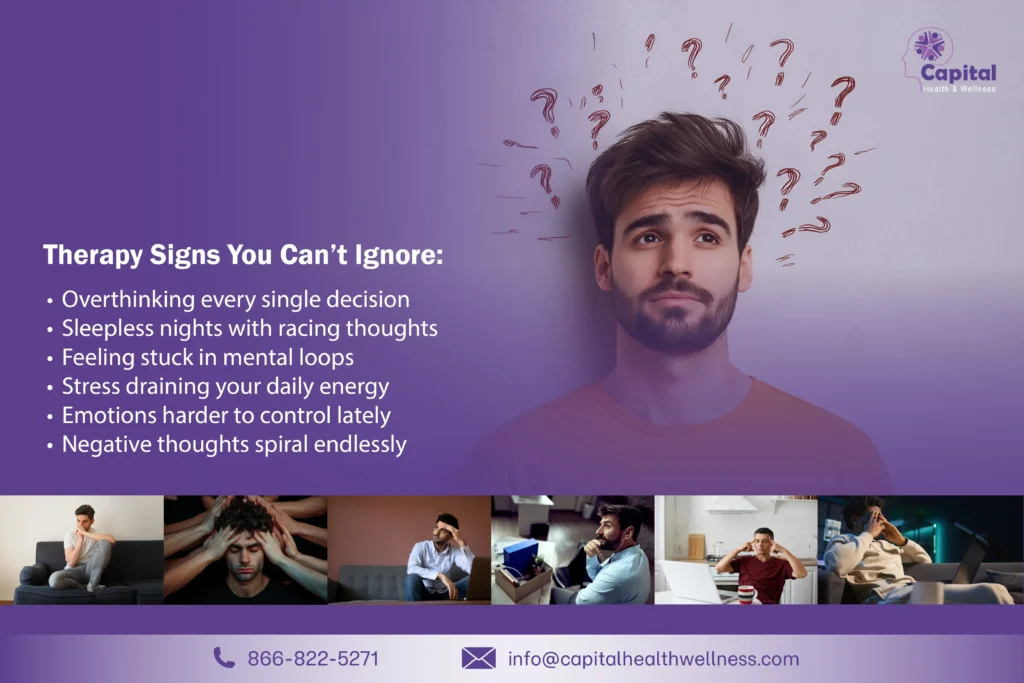
Why Choose Capital Health and Wellness
Finding the right therapist changes everything. Capital Health and Wellness offers compassionate, evidence-based mental health support built around your specific needs. Furthermore, every treatment plan is personalized, with no generic advice and no one-size-fits-all approach.
Licensed therapists here understand emotional distress deeply. However, understanding alone is not enough; real results matter. Our team delivers them consistently, session after session, with professional care you can genuinely trust.
Your Mental Health Deserves More Than Willpower Alone
Feeling mentally drained, emotionally stuck, or overwhelmed is not something you should manage alone. Capital Health and Wellness connects you with licensed therapists who understand exactly what you are going through and know how to help you move forward.
Whether you are struggling with anxiety, depression, trauma, or emotional burnout, professional support is one step away. That step costs nothing to take.
No commitment. No pressure. Just real help from people who care.
Telehealth and in-person sessions available. 100% confidential.
Conclusion
Recognizing that something feels wrong takes courage. Acting on it takes strength. Emotional healing does not happen overnight, but it always starts with one honest step forward. Moreover, mental well-being is not a luxury limited to moments of crisis.
Every person deserves support, clarity, and professional guidance. However, waiting longer only makes recovery harder. Difficulty finding motivation, persistent sadness, or emotional overwhelm, none of these should be carried alone. Help is available. You just have to reach for it.
Frequently Asked Questions
Most people feel genuine improvement within 6 to 8 sessions. However, complex emotional struggles require consistent professional support over the long term.
Yes. Therapists identify hidden emotional patterns causing that emptiness. You do not need a diagnosis to deserve proper professional support.
Many clinics offer flexible payment plans. Capital Health and Wellness provides affordable options, and quality mental health support should never feel financially out of reach.
Completely normal. Processing buried emotions temporarily feels uncomfortable. However, that discomfort means real healing has genuinely started beneath the surface.
Trust your instincts. Good therapy feels safe, honest, and productive. If something feels consistently wrong, finding a better match is perfectly reasonable.