
Your heart races. Your mind won’t stop. You feel scared, but nothing is actually wrong. Millions of people live with this feeling every single day. Yet most of them never get help. So, what is anxiety exactly? It is a real emotional health issue. It affects how you think, feel, and act.
This mental health condition is far more than simple stress. A chronic worry state can quietly take over your whole life. But here is the truth: it is treatable. Understanding it fully is your very first step towards feeling better.
Table of Contents
ToggleWhat Is Anxiety? Understanding the Basics
Anxiety is your brain’s way of responding to danger. It triggers a perceived-danger reaction in your body. Your nervous system sends out alerts, even when there is no real threat. This is called the fear response system. Doctors describe it as a psychiatric condition that affects thinking and behavior.
Some people feel it intermittently. Others deal with it every single day. An anxiety disorder definition simply means excessive fear that does not go away. Furthermore, it falls under the mood disorder and anxiety spectrum disorder category. Real help exists. Recovery is absolutely possible.
Common Anxiety Symptoms: Physical, Emotional & Behavioral
Anxiety does not just affect your mind. It shows up in your body too. Emotional instability can hit without any warning. Many people ignore early signs for years. However, recognizing anxiety disorder symptoms early makes a real difference. Here are the most common ones you should know.
Physical Symptoms of Anxiety
Your body often reacts before your mind does. Nervous system activation causes very real physical changes. These sensations are not imaginary; they are clinical. Autonomic nervous system response can trigger:
- Rapid heartbeat for no clear reason
- Chest tightness or difficulty breathing
- Constant headaches and muscle tension
- Excessive sweating in cool weather
- Trouble falling or staying asleep
Emotional & Cognitive Symptoms
Beyond the body, anxiety disrupts clear thinking, too. Cognitive distortion patterns make small problems feel huge. Emotional overload symptoms leave you feeling completely exhausted. Behavioral avoidance patterns build up slowly. Look out for:
- Racing thoughts and constant overthinking
- Feeling detached or emotionally empty
- Avoiding people, places, or situations
- Difficulty focusing on simple daily tasks
- Sudden irritability or unexplained mood changes
What Causes Anxiety? Key Risk Factors Explained
Anxiety does not appear suddenly. Several things trigger it deep inside your mind and body. Stress-related conditions often build up quietly over months. Past trauma is one of the biggest risk factors. Sometimes a psychological disorder runs in the family.
Internal stress processing breaks down under too much pressure. Furthermore, big life changes can push anyone over the edge. A stressful job, a difficult relationship, or financial worries all contribute.
Psychological reaction to daily pressure builds up over time. The stress response mechanism fires too often. Over time, your body stays permanently stuck in alert mode.
Warning Signs of Anxiety You Should Never Ignore
Most people dismiss anxiety as simple overthinking. However, some signs tell an underlying story. Anxiety-triggering situations can push your body into overdrive.
Excessive fear response takes over without any logical reason. Mental health awareness starts with knowing your own warning signs. Here are seven you must never ignore:
- 1. Avoiding Everyday Situations: Staying away from normal places or people feels safer. But avoidance makes anxiety worse over time.
- 2. Feeling Restless or On Edge: Your body stays tense all day long. Relaxing feels almost impossible even at home.
- 3. Panic Attacks With No Clear Cause: Suddenly, your heart races and breathing becomes difficult. These episodes feel frightening and completely unexpected.
- 4. Anxiety Affecting Work or Relationships: A behavioral health issue starts showing up in daily life. Concentration drops, and relationships begin suffering quietly.
- 5. Emotional Distress Lasting Two Weeks or More: Feeling low, scared, or overwhelmed every single day is not normal. This pattern needs professional attention immediately.
- 6. Sleep Problems From Racing Thoughts: Your mind refuses to switch off at night. Poor sleep makes every symptom feel much worse.
- 7. Physical Symptoms Like Chest Pain or Dizziness: Your body carries anxiety, too. Chest tightness, dizziness, shortness of breath, sweating, and headaches are real warning signals.
You have just read the warning signs. Did any feel familiar? That is your signal.
Don't wait until anxiety controls your life; get professional help today.
Our licensed therapists at Capital Health and Wellness can help you reclaim calm. Starting with one conversation makes all the difference.
Anxiety vs Stress, And When to Seek Professional Help
Stress and anxiety feel similar, but they are very different. Stress usually goes away when the problem is resolved. Anxiety vs stress is a common confusion for most people. However, anxiety stays even when everything seems perfectly fine. Mental well-being deteriorates when anxiety goes untreated for too long.
Cognitive health declines slowly without proper support. The psychological stress response keeps your body in persistent fight-or-flight mode. Furthermore, when to seek help for anxiety becomes clear when daily life starts breaking down. Feeling unable to work, sleep, or connect with others is your sign. Professional support changes everything.
Anxiety Treatment Options That Actually Work
Anxiety is treatable. Many people recover fully with the right support. Clinical mental health care gives you real, proven tools. Therapy is one of the most effective anxiety treatment options available today. Talking to a specialist helps you understand your own mind better.
Medication works well for some people, too. Additionally, lifestyle changes support long-term management of mental health conditions. Exercise, sleep, and healthy eating all play a role. Recovery is not overnight, but it is absolutely possible.
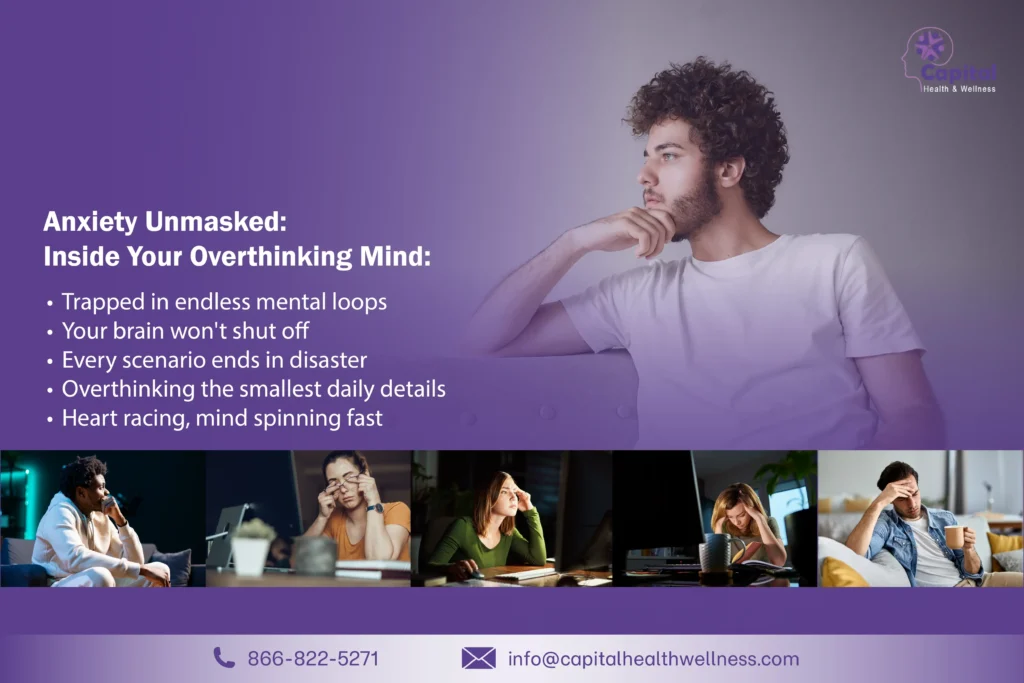
Why Choose Capital Health And Wellness for Anxiety Support?
Finding the right support matters more than anything else. Capital Health and Wellness specializes in evidence-based anxiety care. Every treatment plan is built around your unique needs. Our licensed therapists bring real clinical experience to every session.
Furthermore, we offer both in-person and telehealth appointments for your convenience. Flexible scheduling means help is always within reach. Thousands of people have already started their recovery journey with us. You deserve the same calm, clear, and confident life, too.
What Makes Us Different
Simply put, we listen first. Most clinics rush straight into treatment. We take time to understand your story. Every therapist at Capital Health and Wellness holds a full clinical certification.
Additionally, our approach combines therapy, lifestyle support, and ongoing guidance. Real recovery needs real commitment from both sides.
- Licensed and certified anxiety specialists
- Personalized care plans for every client
- In-person and telehealth options available
- Same-week appointments for faster support
- Confidential, judgment-free environment always
Anxiety does not get better on its own, but the right help changes everything.
Capital Health and Wellness has supported hundreds of people back to calm, clarity, and confidence. Your recovery starts with one single conversation.
Conclusion
Anxiety is real. It is hard. But it does not have to control your life forever. You now understand the signs, causes, and available treatment options. Emotional health improves when you take action early.
Mental well-being is worth fighting for every single day. Furthermore, getting help is not a weakness; it is the bravest thing you can do. Take that first step today.
FAQs
Can anxiety cause physical pain?
Yes. Anxiety triggers real physical pain. Headaches, chest tightness, and muscle aches are very common symptoms.
Is anxiety hereditary?
Yes, anxiety can run in families. However, lifestyle and environment also play a very significant role.
How long does anxiety last?
It varies for every person. Without treatment, anxiety can last months or even years without improving.
Can anxiety affect relationships?
Yes, absolutely. Anxiety causes withdrawal, irritability, and miscommunication. This puts serious strain on personal relationships over time.
What foods help reduce anxiety naturally?
Magnesium-rich foods like spinach, nuts, and dark chocolate support a calmer nervous system naturally and effectively.
Reference
National Institute of Mental Health