
Do you keep replaying the same thoughts over and over? Many people struggle with this daily. This painful cycle is called rumination. It drains your energy and profoundly affects your mood. Moreover, it stops you from living in the present moment. Negative thoughts keep pulling you back.
They feel impossible to escape. However, understanding why this happens is the first step forward. Fortunately, breaking this cycle is possible with the right guidance and care. Capital Health and Wellness specializes in helping people regain mental balance and peace of mind.
What Is Rumination?
Rumination refers to repeatedly thinking about the same problem. These ruminating thoughts feel stuck in a loop. They do not solve anything. Instead, they drain your mental energy fast. Cognitive rumination affects how you feel every day. Additionally, it causes serious mental health effects over time. Simply put, rumination psychology shows us that overthinking hurts more than it helps.
What Does Ruminating Mean in Psychology?
Psychologists describe ruminating as a cognitive response to distress. Your mind keeps circling back to painful moments. These repetitive negative thinking patterns feel automatic and hard to stop. Furthermore, they shape your daily rumination thinking habits without you realizing. Over time, this mental cycle significantly weakens your emotional strength.
What Is Rumination Disorder, and Is It a Mental Illness?
Absolutely, rumination disorder is a recognized mental health condition. Doctors identify it through specific rumination symptoms like constant worry and poor focus. Additionally, repetitive thought patterns make daily life feel overwhelming and exhausting. Consider these common signs:
- Inability to stop negative thoughts
- Feeling mentally drained every single day
- Low mood that never fully lifts
Moreover, psychological rumination often develops alongside anxiety and depression. Seeking professional help early leads to faster, lasting recovery.
What Causes Rumination?
Several factors trigger this exhausting mental cycle. Understanding rumination triggers helps you take back control. Here are the most common causes:
- Past trauma or painful life experiences
- High stress and overwhelming daily pressure
- Low self-esteem and negative self-talk habits
- Perfectionism and fear of making mistakes
Additionally, rumination anxiety keeps your mind locked in worry mode. Your brain treats every problem as a serious threat. This creates a powerful stress rumination response that feels impossible to escape.
Furthermore, ocd rumination makes thoughts feel urgent and uncontrollable. People with difficulties in emotional regulation struggle to switch off these patterns. The cognitive rumination bias causes your mind to focus only on the negative.
Finally, a strong rumination stress response worsens everything over time. Recognizing these causes is your first step toward real healing.
Why Do People Ruminate: The Psychology Behind It
People ruminate because their brains seek solutions to unresolved pain. These deep negative thought patterns feel protective at first. They quickly become harmful rumination and emotional patterns instead.
Emotionally distressing thinking fuels both rumination and depression simultaneously. Additionally, rumination and anxiety feed each other in a vicious rumination cycle. Breaking free requires professional guidance and the right support.
What Is Rumination OCD?
Rumination OCD involves distressing thoughts that feel impossible to control. Unlike regular worry, obsessive-compulsive disorder rumination creates intense mental loops. These thoughts demand constant attention and mental energy.
Furthermore, this condition deeply affects daily functioning and emotional well-being. Understanding this condition clearly helps you seek the right professional support today.
Is Rumination OCD or Anxiety: What’s the Difference?
Both conditions share intrusive negative thoughts and negative thinking loops. However, key differences exist:
- OCD thoughts feel unwanted and ego-dystonic
- Anxiety thoughts focus mainly on future worries
- OCD creates compulsive mental rituals that are repeated
- Anxiety causes generalized fear and constant nervousness
What Is Mental Rumination and How Does It Affect You?
Mental rumination means your mind stays trapped in painful thoughts. These negative thinking loops silently damage your emotional health daily. Cognitive rumination significantly disrupts your sleep, focus, and relationships.
Moreover, rumination and anxiety grow stronger together over time. Poor rumination thinking habits make every small problem feel enormous. Mental rumination is treatable with the right professional care and support.
How to Stop Repetitive Thinking: Strategies That Work
Stopping repetitive thought patterns requires consistent practice and the right tools. Effective rumination coping strategies retrain your brain to think more healthily. Additionally, a strong cognitive response to distress builds emotional resilience over time. Try these proven approaches today.
- Mindfulness meditation quiets an overactive mind effectively
- Journaling releases trapped emotions and negative thoughts
- Cognitive behavioral therapy rewires unhealthy thinking patterns
- Physical exercise reduces stress and improves mental clarity
How to Stop Ruminating on OCD Thoughts
Managing OCD rumination requires targeted professional intervention. Consider these effective options:
- Medication for rumination helps balance brain chemistry effectively
- ERP therapy reduces compulsive stress rumination significantly
- Building emotional regulation difficulties skills improves daily coping
- Regular therapy sessions create long-term, sustainable mental wellness
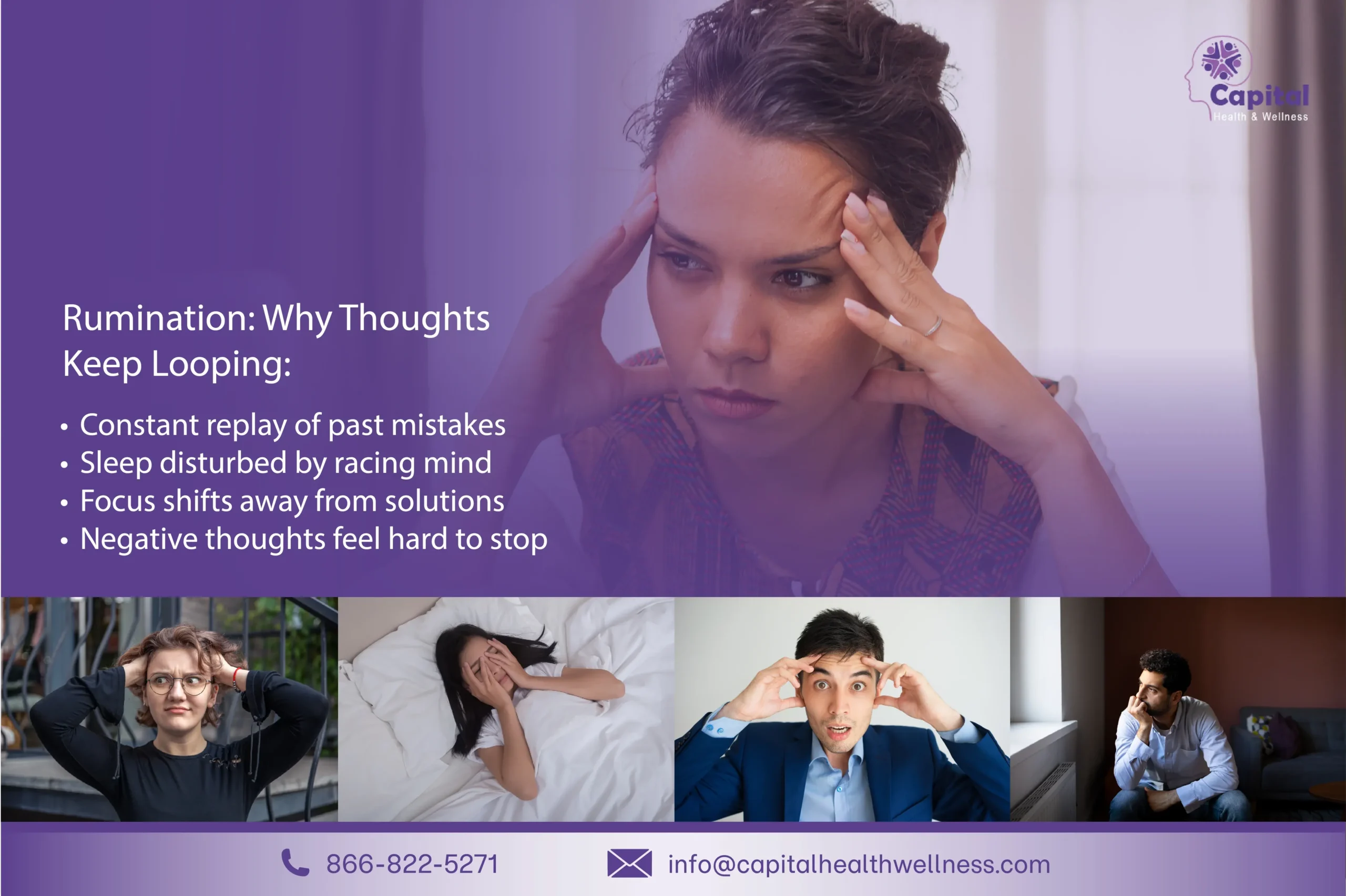
Why Choose Capital Health And Wellness for Rumination Support
Choosing the right support makes every difference in your recovery journey. Capital Health and Wellness specializes in breaking the painful cycle of rumination completely. Our experienced team delivers personalized, evidence-based mental health care. Furthermore, we combine therapy, coaching, and proven clinical strategies.
Every client receives a tailored plan designed for lasting results. Additionally, our compassionate professionals deeply understand your struggles. Take control of your mental well-being today. Book your consultation with Capital Health and Wellness now.
Conclusion
Rumination does not have to control your life any longer. Understanding its causes empowers you to make positive changes. Moreover, professional support significantly accelerates your healing journey.
The right strategies permanently transform your mental patterns. Capital Health and Wellness is here to guide you every step of the way. Reach out today and reclaim your peace of mind.
FAQs
What is rumination in mental health?
Rumination means repeatedly thinking about the same painful thoughts. It drains your energy. Moreover, it worsens both anxiety and depression over time.
Is rumination the same as OCD?
No, but rumination is a common mental compulsion in OCD. It feels urgent and uncontrollable. Furthermore, it keeps the obsessive cycle running continuously.
What causes a person to ruminate?
Past trauma, high stress, and low self-esteem trigger overthinking. Additionally, perfectionism and anxiety make repetitive negative thoughts significantly worse.
How do I stop ruminating on thoughts?
Mindfulness, CBT therapy, and healthy distraction effectively break the cycle. Furthermore, professional support builds long-term emotional resilience and lasting mental clarity.
Can rumination lead to depression?
Yes, absolutely. Research confirms that repetitive negative thinking both increases depressive symptoms and results directly from them. It is a continuous cycle.
Reference