
Fear is one of the most powerful emotions that shapes our daily lives. It can save us, or stop us, from moving forward. When our brain perceives danger, the amygdala instantly sends warning signals throughout the body, preparing us to fight, freeze, or flee.
In ancient times, fear helped humans survive real threats like predators and natural disasters. Today, however, not all fears are equal. Some are protective and logical, while others arise from imagined dangers. This difference defines the concept of rational vs irrational fear, a distinction that plays a key role in emotional and mental wellness.
Rational Fear Explained: The Protective Response
Rational fear refers to a healthy, realistic response to genuine threats. It’s your mind’s natural defense mechanism designed to protect you from harm.
For example:
- Jumping back from a moving car
- Avoiding touching a hot stove
- Checking food expiry dates
- Wearing seatbelts while driving
These fears are rooted in rational fear meaning, they serve a useful purpose. They alert us to real-world dangers and help us act responsibly to avoid harm. A glance at a rational fears list would include fire, wild animals, and dangerous heights.
Irrational Fear Defined: When the Mind Plays Tricks
Irrational fear, on the other hand, involves excessive worry or panic without a real threat. The irrational fear definition is simple: it’s fear that’s out of proportion to reality.
For instance, fearing elevators, balloons, or even certain numbers might seem harmless but can feel overwhelming to those who experience them.
Common examples of irrational fears include:
- Fear of flying, despite its safety record
- Fear of public speaking
- Fear of buttons or cotton wool
Some are serious and limit daily life, while others, like funny irrational fears, can seem amusing, such as fearing garden gnomes or stepping on cracks in the pavement. Regardless of their nature, irrational fears can interfere with everyday functioning if left unaddressed.
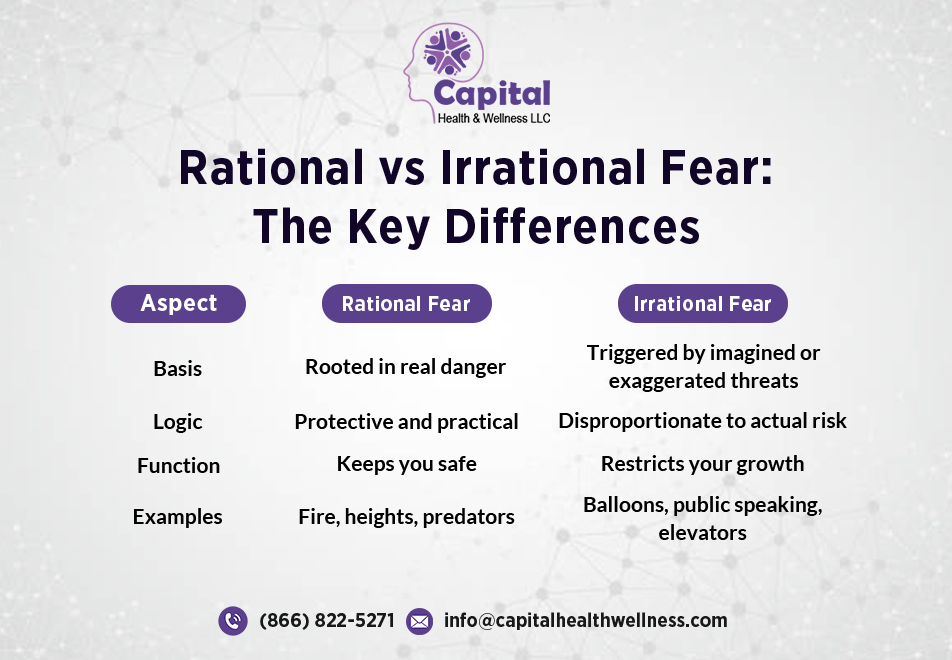
Rational vs Irrational Fear: The Key Differences
| Aspect | Rational Fear | Irrational Fear |
| Basis | Rooted in real danger | Triggered by imagined or exaggerated threats |
| Logic | Protective and practical | Disproportionate to actual risk |
| Function | Keeps you safe | Restricts your growth |
| Examples | Fire, heights, predators | Balloons, public speaking, elevators |
Recognizing these distinctions helps you manage emotional reactions better. Rational fears encourage caution and survival; irrational ones hold you back from living freely.
Take the first step toward emotional freedom, schedule your therapy session today with Capital Health and Wellness.
Why We Mistake Safety for Danger
Modern life rarely involves life-threatening predators, yet our brains still react as if it does. The amygdala, the emotional center of the brain, can’t always distinguish between real and perceived threats.
That’s why you might experience racing heartbeats before a presentation or panic in a perfectly safe airplane cabin. These reactions stem from outdated survival instincts combined with personal experiences and learned fears.
Why Irrational Fears Take Control
Science reveals that irrational fears often originate from overactive amygdala responses and learned behaviors.
- Childhood experiences – A traumatic event or repeated warnings can create lifelong fear associations.
- Genetic predisposition – Some individuals are more sensitive to anxiety and fear-based responses.
- Cognitive bias – The mind tends to remember negative experiences more vividly than positive ones.
These factors explain why some people have phobias while others don’t, even when faced with similar situations.
Funny Irrational Fears We All Relate To
It’s normal to have harmless fears that seem “funny” in hindsight. Examples of the funniest irrational fears include avoiding specific colors, garden gnomes, or odd-numbered objects.
Laughing about such fears can be therapeutic; it reduces the sense of shame, releases stress, and allows you to see fears from a lighter perspective. Humor can transform fear from something controlling you into something you control.
Tip: Try sharing your silly fears with a friend or therapist; it often helps reduce their power.
How to Overcome Irrational Fears and Build Confidence
Overcoming fear starts with awareness and gradual exposure. Here’s how you can retrain your mind to respond calmly:
- Identify triggers – Notice when and why fear occurs.
- Challenge your thoughts – Ask if the danger is real or imagined.
- Practice mindfulness – Deep breathing and meditation calm your nervous system.
- Gradual exposure – Face fears slowly, one step at a time.
- Seek therapy – Professional help provides proven tools to manage persistent fears.
Feeling trapped by fear? Book a personalized therapy session with Capital Health and Wellness and regain control over your life.
When Fear Becomes a Disorder
When fear or anxiety starts affecting work, relationships, or daily tasks, it might indicate a phobia or anxiety disorder. Warning signs include:
- Constant worry or panic without reason
- Avoiding social or professional situations
- Difficulty relaxing even in safe environments
If these symptoms sound familiar, seeking professional help is crucial. Therapy helps reframe your thoughts and teaches you coping mechanisms to regain balance.
Why Choose Capital Health and Wellness for Fear Therapy
At Capital Health and Wellness, we specialize in helping individuals overcome both rational and irrational fears through evidence-based therapy.
Our experienced therapists use cognitive-behavioral therapy (CBT), exposure techniques, and mindfulness training to help clients regain control over their emotions.
Whether you struggle with common phobias or long-term anxiety, our compassionate experts guide you step by step toward lasting emotional freedom.
Ready to stop letting fear control your life? Book a consultation with Capital Health and Wellness today and start your personalized recovery journey.
Conclusion
Fear is natural; it keeps us safe. But when irrational fears take control, they limit our growth and happiness. Understanding the difference between rational vs irrational fear empowers you to act wisely and reclaim your confidence.
At Capital Health and Wellness, we help you overcome fear through personalized, compassionate therapy, because everyone deserves a peaceful mind and a fearless life.
FAQs
What is the difference between rational and irrational fear?
Rational fear is a reasonable reaction to real danger, while irrational fear arises from exaggerated or imagined threats.
How can I tell if my fear is irrational?
If your fear doesn’t match the actual level of danger and limits your daily life, it’s likely irrational.
Can irrational fears be cured?
With therapy and gradual exposure, most irrational fears can be managed or eliminated over time.
Why do some people develop irrational fears?
Past trauma, genetics, and learned behaviors influence how people respond to perceived threats.
When should I seek professional help?
Seek therapy if fear disrupts your normal routine, causes distress, or prevents you from living fully.